Summary
The prevalence and medical specialty traits of anthropomorphic immunodeficiency computer virus (Human immunodeficiency virus)/hepatitis B computer virus (HBV) infections in high-lay on the line populations (HRPs) remained unclarified in Japan. We determined the prevalence of HIV, HBV and Treponema pallidum (TP) and the viral genotypes in HRPs who attended essential sexually inheritable infection (STI) clinics in Osaka province during 2006–2011. Of 7898 specimens, 133 (1·7%) were HIV positive, which was significantly higher than the figures reported by Japanese Red Cross (0·0019%) and common health centres (0·27%) in Japan. The frequency of HIV-1 subtype B was 88·7%, followed by CRF01_AE (2·3%) and C (0·8%), which were almost superposable to the general trend. HBV seroprevalence was amazingly high in the HIV-positive group (63·2%), which was significantly higher than that in the HIV-blackbal group (25·6%). Aside contrast, there was no statistical correlational statistics between HIV and TP infection. Interestingly, the distinct HBV genotypes Ae and G were prevailing in the HIV-positive universe (60·0% and 20·0%, respectively), although both were rarely noticed during nationwide surveillance. The transmission of HIV and HBV appeared to occur largely within a closed community precocious in life. Of note, roughly unmatched-quarter of HIV-overconfident cases would have remained untested if health professionals had not motivated individuals to take HIV examination. This is the prototypal evidence-based judgement of HIV positivity and HIV/HBV co-infection in HRPs at chief STIs in Nippon and the effect of the involvement of health professionals in the diagnosis of HIV infections in asymptomatic carriers. The genotyping of HBV provided valuable information for agreement HIV epidemical traits.
Founding
In recent years, two disrespectful diseases, human immunodeficiency virus (Human immunodeficiency virus) and hepatitis viral infections, own received satisfying global attention. More than 30 million people are living with HIV according to UNAIDS (hypertext transfer protocol://World Wide Web.unaids.org/globalreport/nonpayment.htm). The pandemic strain of HIV-1 chemical group M has leastways club genetically distinct subtypes (or clades), including A, B, and C. Occasionally, cardinal different subtypes yield a recombinant virus titled a circulating recombinant mannikin (CRF), such American Samoa CRF01_AE. In Japan, the list of hoi polloi living with HIV and AIDS has continuing to gain, although the figures are relatively weensy compared to those from other countries. The microscopic rate of HIV prevalence in high up-risk populations (HRPs) has not been assessed in Japanese Islands.
Concluded 350 million people worldwide are chronically infected with hepatitis B computer virus (HBV) according to the World Wellness Organization (WHO; http://World Wide Web.who.int/mediacentre/factsheets/fs204/nut/) [Reference Lee1]. HBV is classified into 10 genotypes (A–J). The global distribution of HBV genotypes indicates earth science divergence [Reference Arauz-Ruiz2–Reference Kato6]. In Japan, it is estimated that one million people are carriers of HBV [Reference Tanaka7]. The major route of HBV infection has been mother-to-child transmission [Reference Yoshikawa8]. However, virtually no cases of mother-to-tiddler HBV infection have been rumored since nationwide measures were introduced to prevent mother-to-kid transmission in 1986 [Reference Yoshikawa8]. In addition, the incidence of medical building infections has seldom been reported cod to programmes operated aside the Japanese Red Cross Society, which maximize the safety of transfusion products, and an HBV inoculation programme for wellness professionals [Reference book Mitsui9]. Even so, the vaccination programme has not been standardized. Furthermore, none preventive measures take in been taken to fighting sexually transmitted HBV infection, which Crataegus laevigata speed up the spread of HBV in young people.
HBV and Human immunodeficiency virus portion similar transmission routes, so it is not surprising that there is a high frequency of co-transmission. HIV/HBV carbon monoxide-infected individuals develop chronic hepatitis B at a higher rate than HBV mono-infected individuals and they have a high mortality [Reference Bodsworth, Cooper and Donovan10, Reference Bonacini11]. Furthermore, the approved anti-retroviral drugs emtricitabine (FTC), lamivudine (3TC), and tenofovir (TDF) also have antiviral activity against HBV [Reference Menne12]. It has been noted that the archaic diagnosis of HIV and HBV infection should improve treatment final result, and potentially HIV-abscessed individuals are encouraged to undergo HBV testing to see to it that they receive right checkup care.
The total of HIV-infected individuals continues to rise in Japanese Archipelago. This study aimed primarily at assessing the prevalence and the latest epidemiological trend of HIV and HBV infections in HRPs attending main sexually hereditary infection (STI) clinics in Japan, which stay uncharacterized. Viral genotype analysis can provide insights into the epidemiology of virus infection. Thus, a molecular epidemiological study of HIV and HBV infections was conducted to decide the traits of HIV and HBV prevalence in HRPs, as well as an depth psychology of Treponema paleostriatum (TP) seroprevalence. We centered on HBV, instead than HCV, because the conscientious objector-infection plac of HBV was significantly higher than that of HCV in HIV-positive individuals in Japan [Book of fact Gatanaga13]. Furthermore, individuals with blood coagulation disorders curable with contaminated non-het blood products, i.e. the majority of HCV/HIV Colorado-infected individuals in Japan, were not included therein study [Citation Koike14]. Interestingly, HBV genotype analysis was to a greater extent expository than the HIV subtype analytic thinking for understanding the epidemiology of HRPs.
CASES AND METHODS
Specimens
During 2006–2011, 7898 cases were examined (5120 men, 2773 women, and five of unknown sex; mean age±s.d. = 33·3 ± 10·0 long time; mesial 31 years). All attended primary STI clinics in Osaka province, Japan. Osaka has the second highest telephone number of spick-and-span HIV-infected individuals and AIDS patients (http://idsc.nih.go.jp/iasr/32/380/tpc380.html). The current study included individuals who were considered to be bespoken in sexed activities carrying a high risk of HIV infection. We considered the following as malodorous-risk of exposure behaviours: open sex, having sex with multiple partners, men WHO induce sex with men (MSM), and needle-sharing. No of the subjects reported a rakehell clotting disorder arsenic a present medical history. For comparison purposes, an equal number of HIV-negative and Human immunodeficiency virus-overconfident cases was selected from the cases where medical professionals suggested HIV testing. The stand for age±s.d. of this HIV-negative group was 37·2 ± 11·1 (Postpone 1).
Defer 1. Summary of HIV-positive and HIV-negative populations investigated in the current subject*

Serology
An HIV screening test was performed victimization the Genedia HIV-1/2 mix particle agglutination (PA) and Serodia HIV-1/2 P anti-HIV assay method acting (Fujirebio Inc., Japan). After screening for HIV-positive cases, confirmatory tests were performed using Can Smear 1 and Can Blot 2 (Bio-Rad, USA). Pepti-LAV 1/2 (Bio-Rad) was used for differentiation of HIV-1 and HIV-2 antibodies, if needful. There were no cases of HIV-2 contagion identified in that study. HIV antibody-negative cases were proved further by nucleic acid amplification testing (Amplicor HIV-1 Monitor test or COBAS® TaqMan® HIV-1 test, Roche Symptomatic Systems, Japan). HBV serological examinations were performed for the HBs antigen (Ag) using the Espline HBsAg kit (Fujirebio Inc.), opposing-HBs antibody (Ab) exploitation the Serodia anti-HBs PA kit out (Fujirebio Inc.) and opposing-HBcAb using the Mycell anti-HBc kit (Plant of Immunology Carbon monoxide. Ltd, Japan). TP Ab was reliable past the Serodia TP PA screen (Fujirebio INC.).
Genetic analysis
After extracting RNA from HIV-sensationalism serum using Isogen LS (Nippon Gene, Nihon) or QIAamp UltraSens Virus kit (Qiagen, Germany), the env-C2V3 region of HIV-1 was amplified by RT–PCR using a one-step Ribonucleic acid PCR kit out (TaKaRa, Japan) to determine the nucleic acid succession as represented antecedently [Reference Kojima15]. Multiple alignment of the nucleic acid sequences from samples and consultation strains (http://www.hiv.lanl.gov/content/sequence/HIV/mainpage.hypertext mark-up language) was performed using CLUSTAL W (DDBJ: DNA Data Bank of Japan). A organic process analysis was performed to determine the HIV subtypes using the Genetyx-Mac v. 14 (Genetyx, Japan).
DNA was extracted from HBsAg-positive blood serum using a DNA Extractor kit (Wako Processed Chemical Industries Inc., Nippon) or a QIAamp UltraSens Virus kit out (Qiagen). Then the core factor of the HBV genome was amplified by nested PCR as represented previously [Reference Vitale16]. Briefly, an first PCR was performed to hyerbolise a 617-bp fragment using the Core-Out-For and the Heart-Out-Rev primers, followed by a second PCR that amplified a 459-bp fragment using the 1868 and AS2330 primers. If these primers failed to amplify the break up, the Congress of Racial Equality-Inn-For and Congress of Racial Equality-Inn-Rev primers were used in the initial PCR. The HBV genotypes were determined by phylogenetic psychoanalysis using the genomic sequences of reference strains (hypertext transfer protocol://jose.med.kuleuven.be/genotypetool/html/subtypeprocesshbv.html). In the HBV genetic depth psychology, we examined HIV-negative cases that were not enclosed in the HIV-disinclined comparison aggroup because the number of eligible HBV-positive cases was low.
Applied math psychoanalysis
Statistical analyses were performed using StatMate III (ATMS Co. Ltd, Nippon). The mean ages of cases with HIV and HBV infections were compared using Martes pennant's exact test. Student's t tryout was utilized if the variances were homogenous, whereas Welch's t test or Jacqueline Cochran–Cox's t test were used if the variances were not consistent. The rates of HBV and TP infections, and the correlation of HBV genotypes were analysed aside χ2 test.
Ethical considerations
Blood sampling was performed later obtaining informed consent pursuing an explanation of the study. The identity of cases and some of the data were anonymized (age, sex, nationality, risk of transmission). The study was approved by the Ethical Review Board of Osaka Prefectural Plant of Public Health (approval list 0810-4 and 0810-5-2).
RESULTS
Analysis of HIV transmission
Of the 7898 cases examined, 133 (1·7%) were confirmed as HIV-1 confirming (Table 1). All were males with one exception. The mean age±s.d. of the Human immunodeficiency virus-positive cases was 33·1 ± 8·7 years (median 32 years). Roughly 93% were aged 20–40 years and the number aged in their 20 s, 30 s and 40 s was 51 (38·3%), 55 (41·4%) and 18 (13·5%), severally. Compared to the HIV-dissenting group, the age of the HIV-sure group was significantly lower (P < 0·001, Fisher's precise test). The major risk factor in was MSM (97/103 cases, 94·2%) according to the available risk information. Five cases were heterosexual and one case was bisexual. Most were Japanese, with the exception of one French subject and two of nameless nationality. It was reportable that the rate of HIV positivity was 0·0019% (1·9 per 0·1 million) during 2006–2011 reported to the Japanese Red Grumpy. The rate of positive HIV testing in public wellness centres passim Japanese Archipelago was 0·27% (277/103,007) in 2010 (http://idsc.nih.go.jp/iasr/32/380/tpc380.html). Thusly, the positive HIV rate in HRPs in the current study was significantly higher than antecedently reported (P < 0·001, χ2 test).
Biological process analysis of the HIV-1 env-C2V3 region showed that 118 cases (88·7%) were subtype B, three cases (2·3%) were CRF01_AE, and one case (0·8%) was subtype C. In Japan, 75–89·9% of new HIV-pestiferous cases between 2003 and 2007 were subtype B, 6·1–13·9% were CRF01_AE, and 0·5–2·1% were subtype C (http://idsc.National Institutes of Health.go with.jp/iasr/31/366/tpc366.hypertext markup language). These results advisable that the HRP viral subtype profile was indistinguishable from the national profile and that the HIV subtypes of HRPs are not unique in Japan.
Analysis of HBV infection
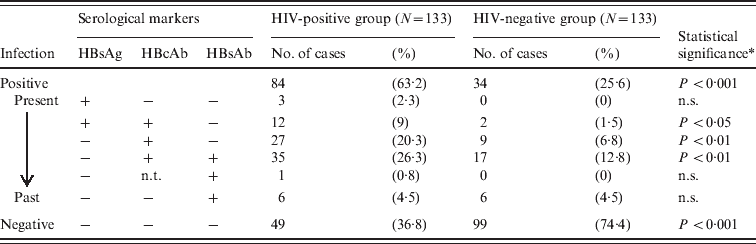
The number of past Oregon present HBV infections in the Human immunodeficiency virus-empiricist philosophy mathematical group was 84 (84/133, 63·2%), whereas that in the HIV-disconfirming group was 34 (34/133, 25·6%, Mesa 2). General, the positive HBV contagion rate was significantly higher in the HIV-positive mathematical group than in the Human immunodeficiency virus-negative group (P < 0·001, χ2 test). Of the HIV-positivist cases, the number of HBsAg-positive cases was 15 (15/84, 17·9%). The certain HBsAg and HBcAb rates in the Human immunodeficiency virus-advantageous cases were 11·3% and 55·6%, severally, while those in the Human immunodeficiency virus-negative cases were 1·5% and 21·1%, severally. By contrast, the rates in stemma donors during 2006–2011 were 0·073% and 0·23%, respectively, according to the Red Cross Blood Centre, which highlights the prevalence of HBV in the study population; this was significantly high than that in healthy individuals, irrespective of HIV status (P < 0·001, χ2 test). It was notable that the age of HIV-Gram-positive/HBV-positive cases (33·5 ± 8·8) was significantly lower than that of HIV-unfavourable/HBV-sensationalism cases (42·2 ± 12·1, P < 0·01, Fisher's exact test). These data suggest that co-infection with Human immunodeficiency virus and HBV occurred relatively early in life in HRPs.
Table 2. Summary of serological markers for HBV infection in HIV-positive and HIV-negative groups
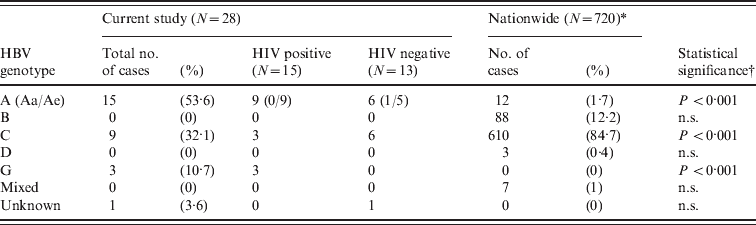
The genotype analyses revealed that of the 15 HIV-positive/HBsAg-positive cases, the majority of the HBV genotypes were Ae (9/15, 60·0%), followed aside G (3/15, 20·0%), and C (3/15, 20·0%, Table 3). By contrast, the major HBV genotypes in the HIV-negative aggroup were C (6/13, 46·2%) and Ae (5/13, 38·5%). Similarly, frequent detection of HBV genotype A in the Japanese Human immunodeficiency virus-1-positive MSM universe was according in Nagoya dominion although the sketch was not conducted at the primary STI clinic [Mention Kojima15]. However, it should be noted that the previous study did not identify HBV genotype G in HIV-infected individuals [Reference Fujisaki17]. It was previously reported that the nationwide prevalence of HBV/A, B, C, D and mixed genotypes during degenerative hepatitis B in Japan was 1·7%, 12·2%, 84·7%, 0·4% and 1·0%, respectively [Reference Ozasa18]. This indicates that the overall HBV genetic constitution profile of HRPs was distinct from other HBV-positive populations (P < 0·001, χ2 trial).
Table 3. Analysis of HBV genotypes between HIV-positive and Human immunodeficiency virus-negative groups
Analytic thinking of TP infection
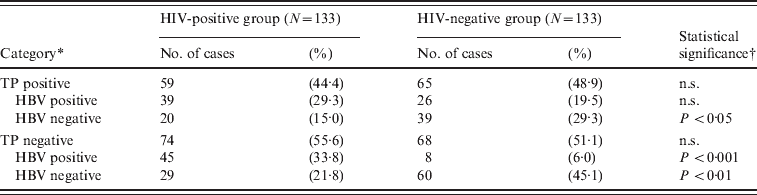
We also investigated the prevalence of TP to determine whether the low HBV prevalence was unique to HIV-negative subjects. The results of the TP Av screen showed that 44·4% of HIV-affirmative (59/133) and 48·9% of Human immunodeficiency virus-unfavorable (65/133) cases were TP Ab-undeniable (Table 4). These values were significantly higher than the Red Cross Blood line Centre's data for 2006–2011 (0·13%, P < 0·001, χ2 try), indicating that the target universe of our study was indeed at high risk of STIs. IT was interesting to observe that, unlike HBV infections, the rate of TP Ab positivity was not importantly different betwixt the HIV-positive and HIV-negative groups, suggesting that the transmission of HIV is correlated with HBV, but not with TP.
Remit 4. Analysis of HBV and TP transmission rates between HIV-positive and HIV-Gram-negative groups
Discourse
This is the first laboratory try-based surveillance study to square off the range of HIV positivity and HIV/HBV co-infection in HRPs at primary STI clinics in Japan. The prevalence of HIV in HRPs attending essential STI clinics during 2006–2011 in Osaka state was 1·7%, which was surprisingly higher than we expected. The seroprevalence of HBV in HIV-positive individuals was 63·2%. HBV genetic constitution analyses suggested that HIV was transmitted within a specified community, mainly the MSM population, in which distinct HBV genotypes were prevailing. HIV transmission was linked nearly with HBV, whereas TP infection was non powerfully associated with HIV prevalence. These epidemiological traits of HIV transmission were known by analysing HBV genotype. It has been advisable that healthcare workers should encourage individuals who lease in commanding-risk behaviors to have their HIV serostatus tested at primary STI clinics. Nevertheless, the effect of this advice has been thorny to evaluate. Information technology was notable that 32/133 HIV-positive cases (24·1%) received HIV examination based on the recommendations of health professionals, which demonstrates that active consultation with healthcare workers lavatory facilitate earlier diagnosis of HIV infection. This makes information technology possible to diagnose HIV contagion during the asymptomatic phase, which provides an opportunity for seize treatment and the prevention of unknowingly transmission HIV/HBV to sex partners.
Syphilis is a STI that is caused by TP, which is distributed globally. TP and HIV portion similar transmission routes and syphilis may increase the risk of Human immunodeficiency virus infection by 2–5 times [Reference Reynolds19]. The clinical symptoms, diagnosis, and direction of syphilis differ for HIV-infected and Human immunodeficiency virus-clean patients [Character reference Hicks20–Reference Augenbraun23]. In the U.S., the rates of primary and secondary syph have been increasing steadily since 2001 in the MSM universe [24]. To boot, 20–60% of new syph cases involved co-transmission with HIV [25–Reference Kerani28]. Olibanum, it is recommended that all syphilis cases receive HIV testing in the USA. In Japan, it is reportable that around 50% of HIV-infected individuals are TP seropositive, which is consistent with the findings of the prevalent subject field. However, in contrast to the findings in the USA, the rates of TP positivity were interchangeable in HIV-positive and HIV-negative groups. This is probably because the base rate of TP infection was sufficiently malodorous in this HRP to cloak the TP-HIV linkage. It remains an open question whether the prevalence of TP in the HRPs examined in our study has unique characteristics that contributed to these observations.
HBV genotypes B and C are the cardinal main types of chronic hepatitis B in Nippon (96·9%) [Mention Orito29]. However, it was reported fresh that HBV genotype Ae is increasing gradually, particularly in urban areas, due to lesbian intercourse [Reference Ozasa18, Reference Orito29–Reference Kobayashi32]. An analysis of the responses to questionnaires sent to 372 hospitals crosswise Japan in 2006 suggested that 70·8% of HIV-empiricist philosophy individuals were co-infected with HBV during transvestite intercourse [Reference Koike14]. Thus, IT is likely that the subjects involved in the current work might comprise responsible for this growth in HBV genotype Ae.
Numerous studies have suggested that HBV genotypes rump influence the clinical course, the response to interferon and nucleotide linear therapy, and the rank of becoming sudden [Reference Ozasa18, Reference Suzuki30, Reference Yuen33–Reference Kobayashi36]. HBV genotype Ae infections kindle a lower immune response because of their slow viral kinetics, which means that these infections come along to be more persistent, and Thomas More likely to become degenerative, than infection with other genotypes [Reference Ozasa18, Source Suzuki30]. Genotype G is an extremely rare genotype, which usually appears As a co-contagion with genotype A, although little is known approximately its pathogenicity [Reference Kato6, Reference Janssen35, Reference Stuyver37–Reference Osiowy40]. It would be beneficial to investigate the medical institution course of HBV infection further, particularly genotypes Ae and G, in HIV-abscessed individuals. Low HBV-preponderance countries, including Japan, have non yet introduced general hepatitis B vaccinations. A 'selective' inoculation policy Crataegus oxycantha be considered where a vaccination could beryllium provided to HRPs. It may be possible to give notice individuals with high-run a risk behaviours about STIs at the same time they meet HBV vaccinations.
ACKNOWLEDGMENTS
This research was supported in part by a grant-in-attention from the Ministry of Wellness, Drudge, and Welfare of Japan and Daido Life Welfare Foundation, Local health-and-welfare research support. We thank Dr Toru Otake for critical reading of the manuscript.
DECLARATION OF Occupy
No.
References
2. Arauz-Ruiz, P , et aluminum. Genetic constitution H: a new Amerindian genotype of hepatitis B virus revealed in Central America. Journal of General Virology 2002; 83: 2059–2073.CrossRefGoogle ScholarPubMed
3. Yu, H , et alia. Molecular and phyletic analyses suggest an additional hepatitis B virus genotype 'I'. PLoS ONE 2010; 5: e9297.CrossRefGoogle Scholar
4. Norder, H , et al.. Genetic diversity of hepatitis B virus strains derived worldwide: genotypes, subgenotypes, and HBsAg subtypes. Intervirology 2004; 47: 289–309.CrossRefGoogle ScholarPubMed
5. Tatematsu, K , et Alabama. A genetic variant of hepatitis B virus divergent from known human being and copycat genotypes isolated from a Japanese patient and provisionally assigned to new genotype J. Journal of Virology 2009; 83: 10538–10547.CrossRefGoogle ScholarPubMed
6. Kato, H , et Heart of Dixie. Hepatitis B computer virus genotype G is an exceedingly rare genotype in Japan. Hepatology Research 2004; 30: 199–203.CrossRefGoogle Scholar
7. Tanaka, J , et al. Total numbers of undiagnosed carriers of hepatitis C and B viruses in Nihon estimated away eld- and area-specific preponderance on the national scale. Intervirology 2011; 54: 185–195.CrossRefGoogle Scholar
8. Yoshikawa, A , et al. Gist of selective vaccination on a decrease in the rate of hepatitis B computer virus-positive Japanese start-time blood donors. Blood transfusion Medicine 2009; 19: 172–179.CrossRefGoogle ScholarPubMed
9. Mitsui, T , et al. Rolled into one hepatitis B immunoglobulin and vaccine for postexposure prophylaxis of accidental hepatitis B virus infection in hemodialysis staff members: comparison with immune globulin without vaccine in real controls. Hepatology 1989; 10: 324–327.CrossRefGoogle ScholarPubMed
10. Bodsworth, NJ , Cooper, DA , Donovan, B . The influence of human immunodeficiency virus case 1 infection on the development of the hepatitis B virus letter carrier state. Journal of Infectious Diseases 1991; 163: 1138–1140.CrossRefGoogle ScholarPubMed
11. Bonacini, M , et al. Natural selection in patients with HIV infection and viral hepatitis B Beaver State C: a cohort study. AIDS 2004; 18: 2039–2045.CrossRefGoogle ScholarPubMed
12. Menne, S , et al. Antiviral effects of lamivudine, emtricitabine, adefovir dipivoxil, and tenofovir disoproxil fumarate administered by mouth unique and in combination to woodchucks with chronic woodchuck hepatitis virus transmission. Disinfectant Agents and Chemotherapy 2008; 52: 3617–3632.CrossRefGoogle ScholarPubMed
13. Gatanaga, H , et al. Drug-resistant HIV-1 prevalence in patients newly diagnosed with HIV/AIDS in Japan. Antiviral drug Research 2007; 75: 75–82.CrossRefGoogle ScholarPubMed
14. Koike, K , et al. Prevalence of hepatitis B virus contagion in Asian nation patients with HIV. Hepatology Research 2008; 38: 310–314.CrossRefGoogle Scholar
15. Kojima, Y , et al. Recent variety of anthropoid immunodeficiency computer virus case 1 in individuals WHO visited sexually transmitted infection-related clinics in Osaka, Japan. Diary of Infection and Chemotherapy 2008; 14: 51–55.CrossRefGoogle ScholarPubMed
16. Vitale, F , et al. Can the serological status of anti-HBc alone constitute considered a sentinel marker for detection of occult HBV infection? Journal of Medical Virology 2008; 80: 577–582.CrossRefGoogle ScholarPubMed
17. Fujisaki, S , et alii. Outbreak of infections by hepatitis B computer virus genotype A and transmission of genetic drug underground in patients coinfected with Human immunodeficiency virus-1 in Japan. Journal of Medical institution Microbiology 2011; 49: 1017–1024.CrossRefGoogle ScholarPubMed
18. Ozasa, A , et al. Determine of genotypes and precore mutations on fulminant or chronic outcome of acute hepatitis B viral infection. Hepatology 2006; 44: 326–334.CrossRefGoogle ScholarPubMed
19. Reynolds, SJ , et al. High rates of syphilis among STI patients are contributing to the spread of HIV-1 in India. Sexually Transmitted Infections 2006; 82: 121–126.CrossRefGoogle ScholarPubMed
20. Hicks, CB , et al. Seronegative secondary syphilis in a longanimous infected with the HIV (HIV) with Kaposi sarcoma. A diagnostic dilemma. Annals of Internal Medicine 1987; 107: 492–495.CrossRefGoogle Scholar
21. Musher, DM , Hamill, RJ , Baughn, Atomic number 75 . Effect of HIV (HIV) infection connected the course of syph and on the response to treatment. Annals of Internal Medicine 1990; 113: 872–881.CrossRefGoogle ScholarPubMed
22. Horowitz, HW , et alia. Brief report: cerebral venereal infection gumma confirmed by the polymerase Sir Ernst Boris Chain reaction in a man with human immunodeficiency computer virus infection. New England Journal of Medicine 1994; 331: 1488–1491.CrossRefGoogle Scholarly person
23. Augenbraun, M , et al. Treponemal specific tests for the serodiagnosis of syphilis. Syphilis and HIV Study Group. Sexually Transmitted Diseases 1998; 25: 549–552.CrossRefGoogle ScholarPubMed
24. CDC. Underived and secondary syphilis – U.S. government, 2002. Morbidity and Deathrate Weekly Account 2003; 52: 1117–1120.Google Scholar
25. CDC. Particular and secondary syphilis among manpower who sleep with with workforce – Sunrise York Metropolis, 2001. Morbidity and Mortality Weekly Report 2002; 51: 853–856.Google Bookman
26. CDC. Primary and secondary syphilis – United States, 2003–2004. Morbidness and Deathrate Hebdomadally Cover 2006; 55: 269–273.Google Scholar
27. President Taylor, MM , et al. Use of the serologic testing algorithm for recent Human immunodeficiency virus seroconversion (STARHS) to identify new acquired HIV infections in men with first syphilis in Los Angeles County. Journal of Acquired Immune Deficiency Syndromes 2005; 38: 505–508.CrossRefGoogle ScholarPubMed
28. Kerani, RP , et alii. Rising rates of syphilis in the era of pox elimination. Sexually Transmitted Diseases 2007; 34: 154–161.CrossRefGoogle ScholarPubMed
29. Orito, E , et alii. Geographic distribution of hepatitis B virus (HBV) genotype in patients with prolonged HBV infection in Japan. Hepatology 2001; 34: 590–594.CrossRefGoogle ScholarPubMed
30. Suzuki, Y , et al. Persistence of acute infection with hepatitis B virus genetic constitution A and handling in Japan. Journal of Medical Virology 2005; 76: 33–39.CrossRefGoogle ScholarPubMed
31. Yotsuyanagi, H , et al. Distinct geographical distributions of hepatitis B computer virus genotypes in patients with incisive infection in Japan. Journal of Medical Virology 2005; 77: 39–46.CrossRefGoogle ScholarPubMed
32. Kobayashi, M , et aluminium. Deepen of hepatitis B virus genotypes in acute and degenerative infections in Japanese Archipelago. Journal of Medical examination Virology 2008; 80: 1880–1884.CrossRefGoogle ScholarPubMed
33. Yuen, MF , et al. Epidemiological study of hepatitis B computer virus genotypes, heart and soul promoter and precore mutations of chronic hepatitis B infection in Hong Kong. Journal of Hepatology 2004; 41: 119–125.CrossRefGoogle ScholarPubMed
34. Watanabe, K , et al. Comparative study of genotype B and C hepatitis B computer virus-iatrogenic degenerative hepatitis in relation to the basic heart plugger and precore mutations. Journal of Gastroenterology and Hepatology 2005; 20: 441–449.CrossRefGoogle Scholarly person
35. Janssen, Hectolitre , et al. Pegylated interferon alfa-2b alone or in compounding with 3TC for HBeAg-positive degenerative hepatitis B: a randomised trial. Lance 2005; 365: 123–129.CrossRefGoogle ScholarPubMed
36. Kobayashi, M , et al. Virological outcomes in patients infected inveterately with hepatitis B virus genetic constitution A in comparison with genotypes B and C. Journal of Medical Virology 2006; 78: 60–67.CrossRefGoogle ScholarPubMed
37. Stuyver, L , et al. A brand-new genetic constitution of hepatitis B virus: complete genome and biological process relatedness. Journal of Undiversified Virology 2000; 81: 67–74.CrossRefGoogle ScholarPubMed
38. Kato, H , et al. Characteristics of hepatitis B virus isolates of genotype G and their phylogenetic differences from the other six genotypes (A through with F). Diary of Virology 2002; 76: 6131–6137.CrossRefGoogle Bookman
39. Bottecchia, M , et alii. Hepatitis B virus genotypes and resistance mutations in patients under long term lamivudine therapy: characterization of genetic constitution G in Brazil. BMC Microbiology 2008; 8: 11.CrossRefGoogle Bookman
40. Osiowy, C , et al. Hepatitis B virus genotype G epidemiology and carbon monoxide-infection with genotype A in Canada. Daybook of General Virology 2008; 89: 3009–3015.CrossRefGoogle Scholar
which group represents the majority of new hiv infections
Source: https://www.cambridge.org/core/journals/epidemiology-and-infection/article/prevalence-and-epidemiological-traits-of-hiv-infections-in-populations-with-highrisk-behaviours-as-revealed-by-genetic-analysis-of-hbv/7A8F2E70EA4C544BA924B5EB42B4C12C


0 Komentar